MAI Progress Update: Measuring Meaning Beneath the Surface
Accomplished and What’s Next

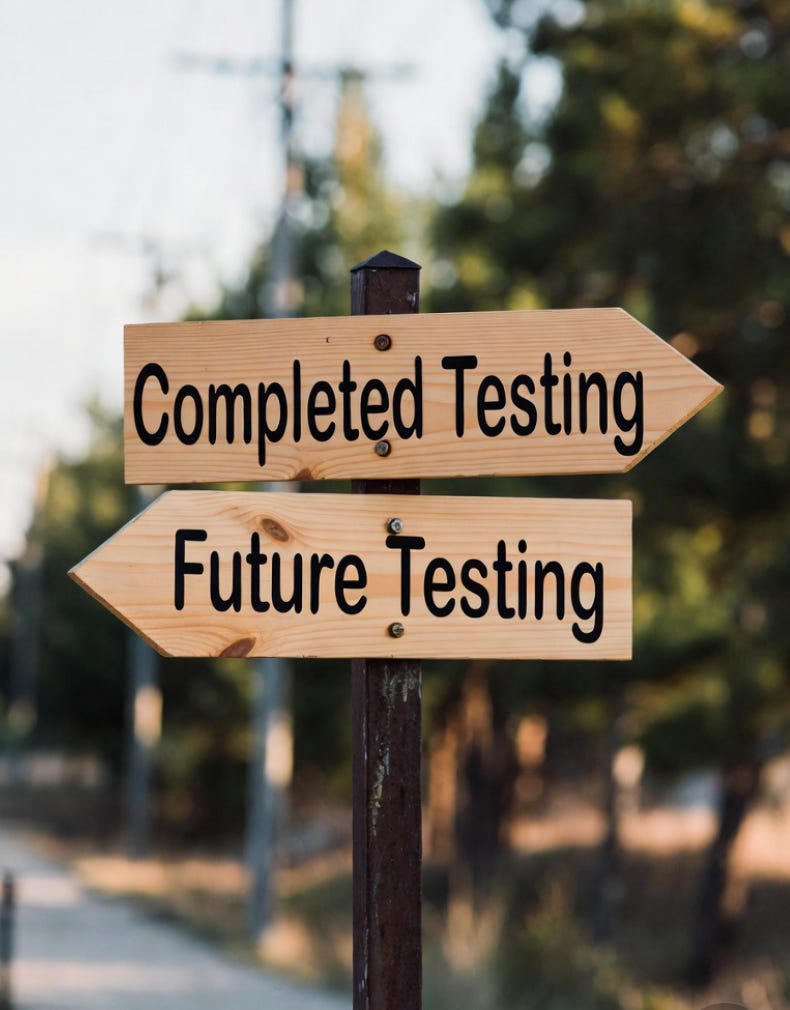
MAI measures how conversations change shape when they involve safety concerns - not by flagging keywords, but by tracking geometric patterns in how meaning shifts. Think of it as measuring the structure of concern, not just the words used to express it.
Quick update on the Meaning Alignment Index (MAI) framework. After two months of structured testing across multiple languages and safety-relevant domains, the framework demonstrates stability and measurable consistency. Here’s what’s been accomplished and what comes next.
Completed Testing:
Testing has covered a range of safety-relevant scenarios to validate the framework’s ability to detect structural changes in conversation:
· BB Gun — subtle weapon / threat framing
· Chinese Birthday Clock — cultural taboo + indirect harm symbolism
· Domestic violence — threats and escalation
· Suicide — extreme self-harm / existential despair
· Depression — cognitive/emotional rigidity + sub-basins
· Grief — loss, remembering, sacred (with cultural and framing variations)
Note: Because these topics are sensitive, detailed results are withheld from public posting and will appear in peer-reviewed publication.
Key results:
· MAI can detect structural changes in conversations that signal safety concerns.
· MAI does not rely on explicit lexical markers; detection emerges from geometric deformation (alignment coherence, prosodic temperature displacement, Shannon entropy, basin classification, and curvature metrics)
· MAI demonstrates cross-lingual robustness in exploratory testing (English, Chinese, Swedish, Japanese, Hawaiian, Hindi).
False-positive resistance testing suggests that cultural symbolism alone does not trigger safety alerts without structural destabilization.
Future Testing:
· Manipulation detection
· Vulnerability exploitation patterns
· DARVO detection (Deny, Attack, Reverse Victim/Offender)
· Radicalization escalation tracking
· Cross-model validation
· Statistical robustness testing
· Topological Distance
MAI’s Role:
MAI remains focused on measurement, not enforcement. All testing uses synthetic scenarios or public-domain text, with appropriate ethical safeguards
If this work intersects with your research in clinical psychology, AI safety, cross-cultural communication, or ML interpretability, I’m open to structured collaboration on validation testing.
Why This Matters:
Current AI safety systems rely heavily on keyword detection, which misses implicit expressions of harm - especially across cultures. MAI offers a complementary approach: measuring the geometry of meaning rather than just flagging words.
Thank you again for walking with me on this journey—exploring how meaning can be measured, and how doing so may help humans and AI align through shared semantic structure rather than speculation.
Russ Palmer
Independent Researcher, AMS & MAI Projects
Exploring how meaning emerges without a mind — and why that matters now.
🔗 Google Scholar Profile
🔗Zenodo: Meaning Alignment Index – Interpretability. Building directly on the AMS framework https://zenodo.org/records/17945039
🔗 Zenodo: Agnostic Meaning Substrate https://zenodo.org/records/16643857